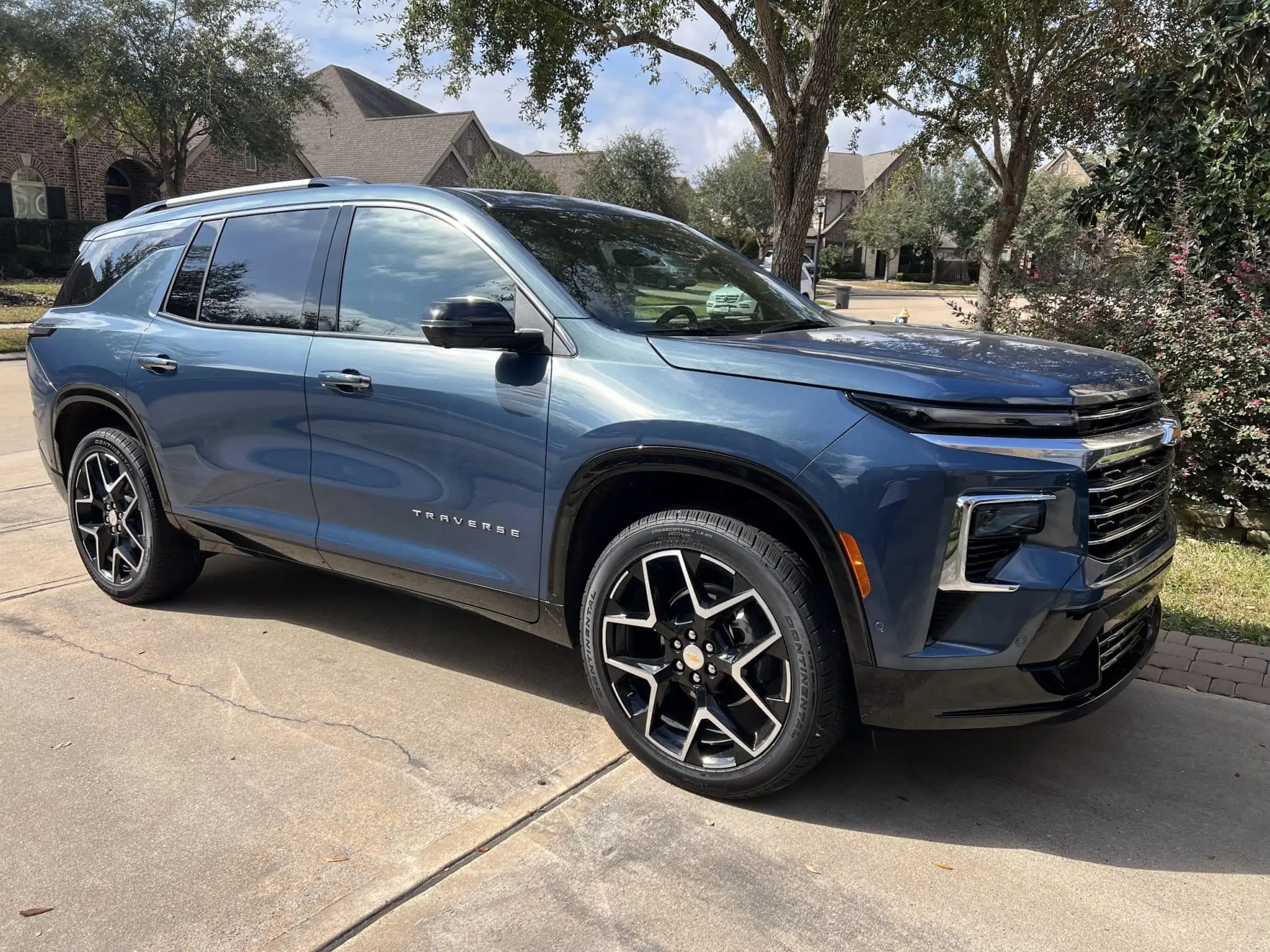
Chevrolet has gone all-in with the new 2025 Chevy Traverse to mature into a solid player in the crowded 3-row SUV space. New for 2024, and unchanged for 2025, the new Traverse is bigger, looks better, and is packed with tech that brings the Traverse to the top of its class. While it’s a fantastic generational change, a few things keep it from being at the very top. Still, because the Traverse is priced highly competitively, buyers might find those quirks to be non-issues.

The new Chevrolet Traverse pictured in High Country trim is a suitably fashionable and versatile alternative to the more grown-up and expensive Chevrolet Tahoe. Previously, the Traverse was somewhat anonymous and blended in well with the background. It has always been a good SUV, but the new Traverse takes solid strides in giving it its own identity and purpose.
The new Traverse exterior is actually 1.4 inches shorter than the outgoing model at 204.5 inches in length, putting it six inches shorter than the current Tahoe. It’s also slightly narrower (-0.7 inches), and overall height is lower (-0.8 inches) compared to the previous generation Traverse’s exterior. While smaller on the exterior, there are some meaningful interior dimensions that have grown to provide more room. More on that in a bit.
The new Traverse features the new Chevy family front fascia, bold sculpting of the front and rear fenders, a faux quad exhaust, and LED lights front and rear. This iteration of the Traverse looks far more premium than before and is extremely visually attractive. The Lakeshore Blue paint is a gorgeous shade on the Traverse.

The Traverse High Country is the highest-end Traverse trim and equips the interior with leather seating surfaces, heated and ventilated front seats, a Bose 10-speaker stereo system, power-folding second and third row seats, 22-inch two-tone wheels, and an upgraded suspension. The High Country also has the option of GM’s fantastic Super Cruise hands-free driving system.

The interior of the new third-generation Chevy Traverse is a pleasant place to reside. Being the highest trim model of the Traverse I would have expected the High Country to have a slightly more upscale dashboard from a materials standpoint, but it doesn’t feel low-rent. The cabin feels spacious, and the seats are comfortable.

The instrument cluster is an 11.0-inch digital multifunction screen, while the infotainment and vehicle controls are handled through a 17.7-inch touchscreen above the center stack. The Bose stereo sounds decent, and Apple CarPlay and Android Auto are standard.

The second row of the Traverse High Country tester we had featured captain’s chairs, which are comfortable and easy to get in and out of. They also provide easy access to the third row, with a relaxed seating position that most average-sized adults can sit in without trouble.

While the exterior of the Traverse has shrunk slightly over the previous generation, Chevy packaging wizards increased front shoulder room by 0.4 inches, front hip room by 0.6 inches, and second-row legroom by 3.1 inches. Second-row hip room has increased by 1.7 inches, though the third-row legroom has been compromised by a reduction of 1.3 inches.

Cargo space is rated at 58 cubic feet of storage behind the 3rd row, and 98 cubic feet of storage with the second row folded down. There is additional storage below the rear storage area, and a compact spare tire. The second and third rows can be folded down from the cargo area, but the second row has to be manually raised.

The Achilles heel of the new Chevrolet Traverse is the new turbocharged 2.5-liter, four-cylinder engine, which is rated at 328 horsepower and 326 lb.-ft. of torque. While this engine shares some of the lineage of the fantastic 2.7-liter turbo engine found in the Colorado and Canyon pickup, it doesn’t execute well compared to the outgoing V6. It’s loud, slower than the outgoing model, and cheapens the driving experience for better fuel economy and lower carbon emissions. In this case, the juice isn’t worth the squeeze as AWD models are rated at 21 mpg combined, which is only one mpg better than the prior generation’s V6.
It’s fine at the end of the day, but this is the biggest letdown in an otherwise excellent vehicle. I don’t know if this will put off buyers, but it’s a worse experience than other vehicles in the Traverse’s class.
The Traverse High Country tester used for this review came nearly fully loaded and priced at $54,995. The more utilitarian but equally solid Traverse LT starts at $40,600. This offers a wide range of prices for buyers who want to find the perfect Traverse trim. The Traverse has a lot of bang for the buck and now has an attractive identity that stands out. If you can forgive the engine, the rest of the Traverse is a great place to put hundreds of miles on it.


You must be logged in to post a comment.